
Icinga Director's CLI commands have supported import sources and sync rules for a long time, which includes listing, checking and running them. Before Icinga Director v1.11.6 two things you...
Icinga Director: Targeted Health Checks and Sync Rule/Import Source Deletes from CLI
Icinga Director's CLI commands have supported import sources and sync rules for a long time, which includes listing, checking and running them. Before Icinga Director v1.11.6 two things you...
Password Policies in Icinga Web
Icinga Web 2 now ships a PasswordPolicyHook that gives administrators and module developers full control over what constitutes a valid password. Instead of hard-coding a single rule set for every deployment, the hook makes password validation an extension point: any...

Building a Shared Icon and Font Library for Icinga Web
If you've copied the same icon font or the same LESS helper into two or three Icinga Web modules, you've hit the problem libraries exist to solve. This guide builds one from scratch: a small, self-contained icon and font pack that any number of modules can share, with...

Releasing Icinga Web v2.10
Today we’re announcing the general availability of Icinga Web v2.10.0. You can find all issues related to this release on our Roadmap. Please make sure to also check the respective upgrading section in the documentation. The Appearance of Dark and Light We have...
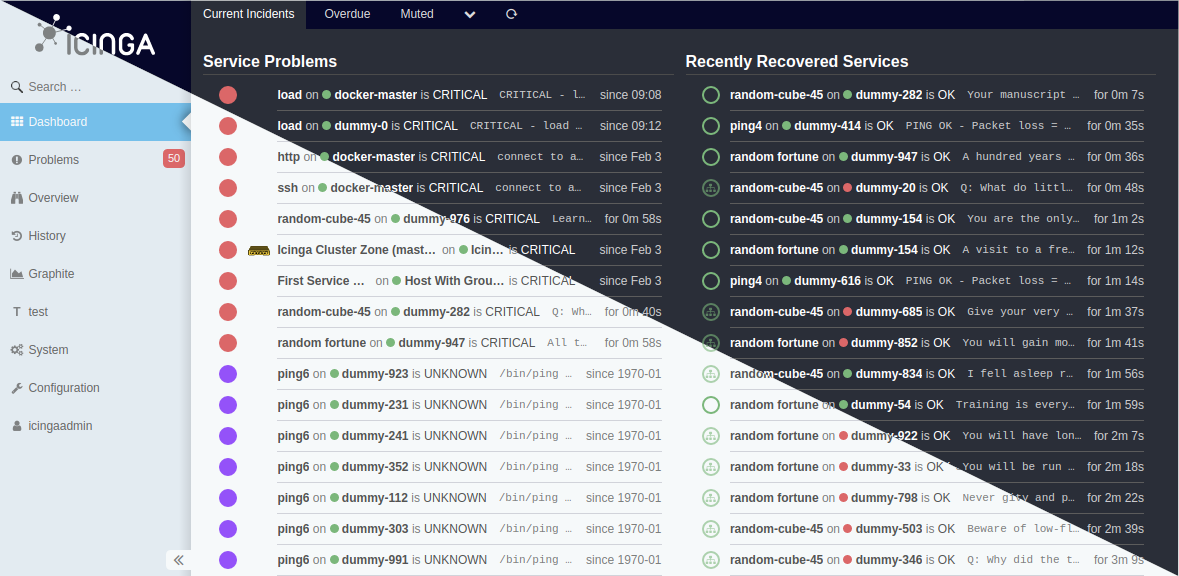
Icinga Web – Not just Black and White
Most of you know that Icinga Web can be adjusted by themes. Some of you also have made some! Icinga Web itself comes with several themes since the early days. Now with the next upcoming major update v2.10 we'll take themes to their next evolution. But since we've...
Polishing the Icinga DB Web User Interface
When redesigning the new Icinga DB Web interface elements we already started establishing consistent design elements. This is even more supported by developing the Icinga PHP Library (IPL) from the ground up. IPL makes developing reusable widgets a lot easier for...

How to monitor a web server running NGINX|httpd
Web servers are software services that store resources for a website and then makes them available over the World Wide Web. These stored resources can be text, images, video and application data. Computers that are interfaced with the server mostly web browsers...
Releasing Icinga Web v2.9.0
Today we’re announcing the general availability of Icinga Web v2.7.5, v2.8.3 and v2.9.0. Besides the compatibility with IcingaDB, the v2.9.0 release includes major enhancements to access control, support for PHP 8, the possibility to stay logged in during browser...

Introducing dark and light theme modes
We are constantly working to make Icinga even better by adding new useful features. We will be releasing Icinga Web 2 version 2.9.0 very soon. This version will have many new interesting features. Update: The initial version of this article mentioned v2.9 as target...

Web Access Control Redefined
One of the focuses of version 2.9 of Icinga Web 2 will be on access control. For years on now, Icinga Web 2 had a very simple role based access control (RBAC) implementation: Users can occupy multiple roles Each role provides a set of permissions Each role provides a...

Using the Icinga Web API
Unfortunately, there is little to no documentation for using the Icinga Web API to perform monitoring actions such as scheduling downtimes. But it's a simple thing and I'll give you a quick example of how to do it. Using the Icinga Web API instead of the Icinga API...
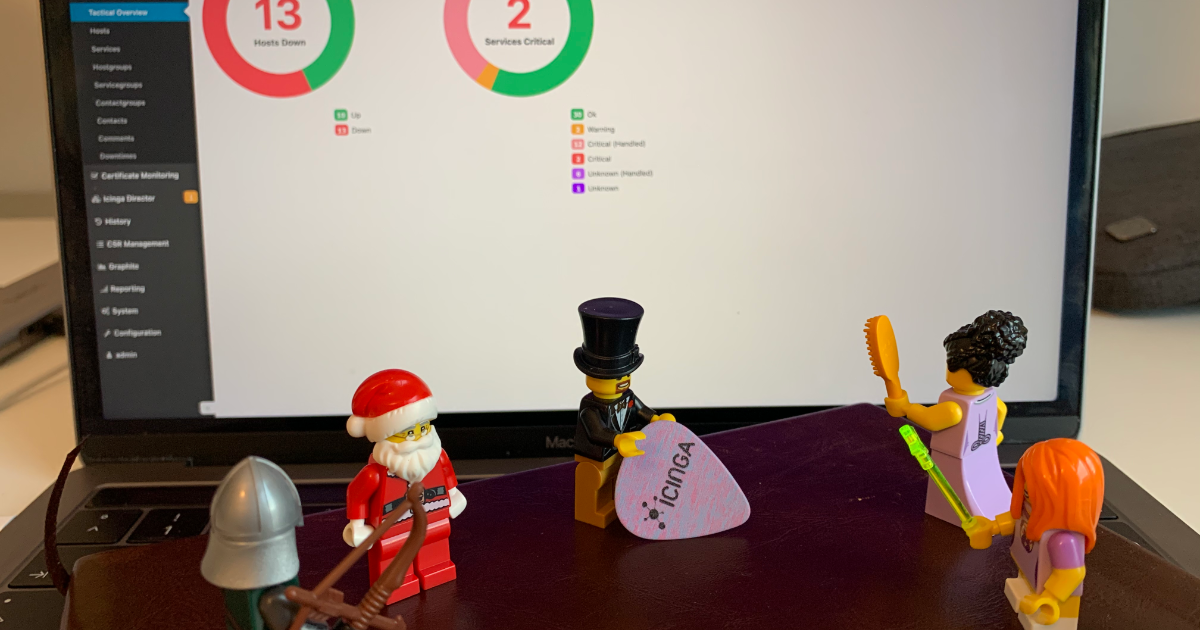
How to fetch data from Icinga Web
There are multiple ways to interact programatically with Icinga. Last week Henrik demonstrated how to connect to the Icinga 2 API through the Icinga 2 Console. Working with the Icinga 2 API is probably the most obvious way to interact with Icinga. Still, I would like...

Subscribe to our Newsletter
A monthly digest of the latest Icinga news, releases, articles and community topics.