
Introduction “Please enter the code we just sent you.” – most people have seen this message when logging into an online service. Two-Factor Authentication (2FA) is no longer reserved for banks or...
Two Factors, Double Security?
Introduction “Please enter the code we just sent you.” – most people have seen this message when logging into an online service. Two-Factor Authentication (2FA) is no longer reserved for banks or...
Releasing Icinga 2 v2.15.1, 2.14.7 and 2.13.13 and Icinga DB Web v1.2.3 and 1.1.4
Today, we are releasing security updates for Icinga 2 and Icinga DB Web fixing multiple security issues. Two of them allow authenticated API users to learn restricted information or crash Icinga 2. On Icinga 2, a third issue affecting the provided scripts allows a...
Nagios Alternatives: Why Icinga Is the Strongest Choice
Introduction Nagios has long been a trusted name in IT monitoring. Its plugin-based architecture and long-standing community have made it a stable choice for organizations of all sizes. However, IT infrastructures have changed dramatically in the last decade. With...

Icinga DB Housekeeping
Introduction We all know that the history data is important in monitoring. But this history data becomes obsolete over time and those records become garbage which would only fill up space. So it is important to remove obsolete history records to free up space. We call...

Installing Additional Modules in the Icinga Web 2 Docker Container
The Docker images we provide for both Icinga 2 and Icinga Web 2 already contain quite a number of modules. For example, the Icinga Web 2 image contains all the Web modules developed by us. But one of the main benefits of Icinga is extensibility, so you might want to...
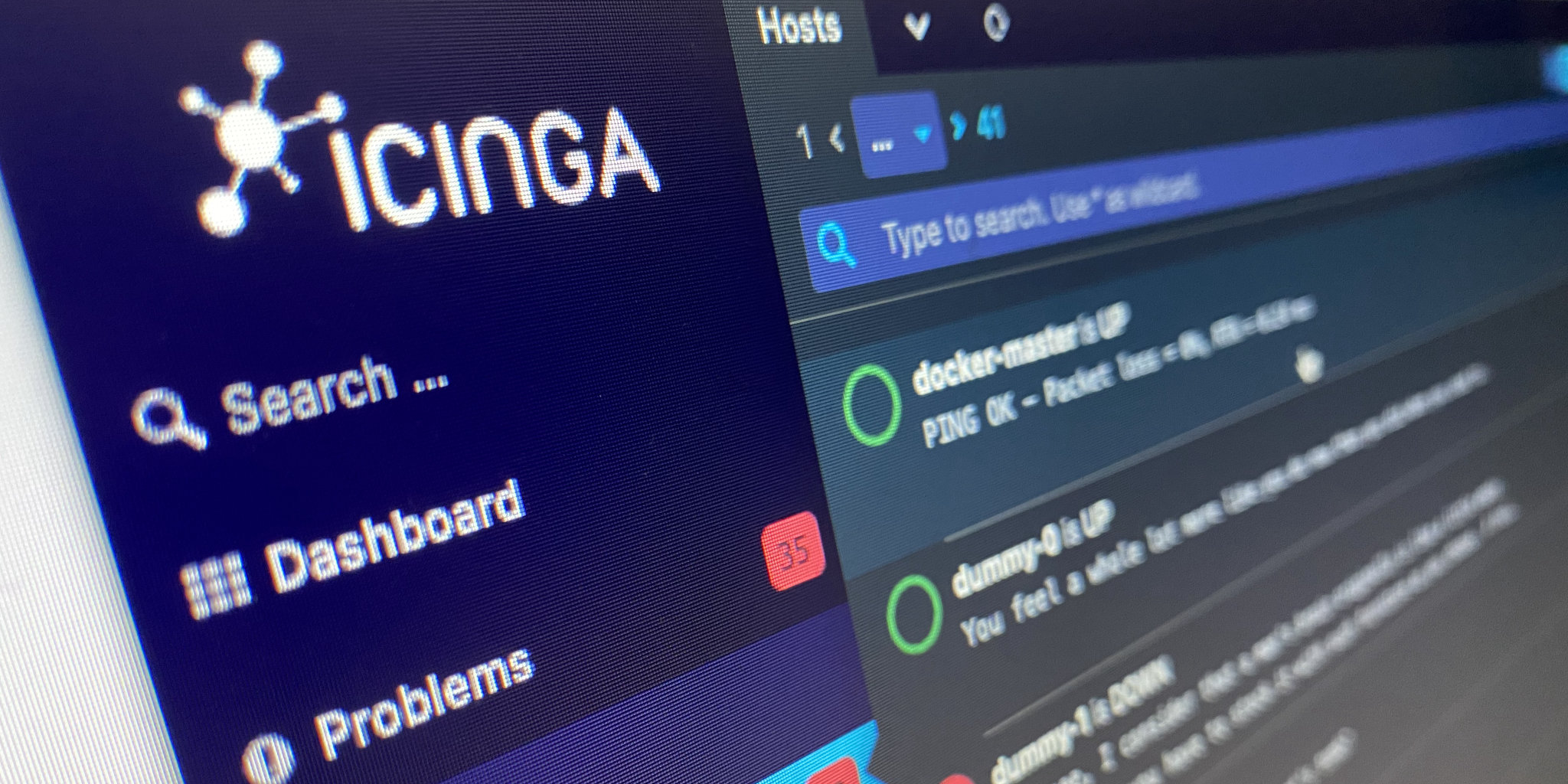
Polishing the Icinga DB Web User Interface
When redesigning the new Icinga DB Web interface elements we already started establishing consistent design elements. This is even more supported by developing the Icinga PHP Library (IPL) from the ground up. IPL makes developing reusable widgets a lot easier for...

How to monitor a web server running NGINX|httpd
Web servers are software services that store resources for a website and then makes them available over the World Wide Web. These stored resources can be text, images, video and application data. Computers that are interfaced with the server mostly web browsers...

What to expect from an Icinga Fundamentals training
Let's set the scene: You just started out with Icinga, maybe because you have realised your need for monitoring or you have inherited an environment. Maybe your boss just decided that this is what you are going to do now. So you are now sitting in front of the...

Releasing Icinga for Windows v1.6.0 – Easier and more Secure
Today we are happy to announce the release of Icinga for Windows v1.6.0, which we already demonstrated on YouTube last week. This is one of our largest releases so far, as we improve the entire usability, flexibility, and security of Icinga for Windows. The following...

MySQL queries – faster than light (almost)
(The title image from NASA is available under the CC BY 2.0 license.) At the moment I'm working at a tool for migrating Icinga 2 IDO history to Icinga DB. Sure, one could also run IDO and Icinga DB in parallel for one year and then switch to Icinga DB if they only...
Icinga 2.13.1 + 2.12.6 + 2.11.11: Security and Bugfix Releases
Today we're releasing the security and bugfix versions 2.13.1, 2.12.6 and 2.11.11. The main focus of these versions is a security vulnerability in the TLS certificate verification of our metrics writers ElasticsearchWriter, GelfWriter, InfluxdbWriter and...

How to monitor your first Host with Icinga Director
Creating a new Host within the Icinga 2 configuration files is fairly easy. Basically you only have add an object of the type "Host" to a config file and reload Icinga 2. Doing the same with Icinga Director is even easier, you don't even have to bother with terminal...

Subscribe to our Newsletter
A monthly digest of the latest Icinga news, releases, articles and community topics.