
The OTLPMetricsWriter is a new Icinga 2 feature available since v2.16 that exports check plugin performance data as OpenTelemetry-compliant metrics via the OTLP HTTP protocol. With a single...

Icinga 2 Meets OpenTelemetry: Native Metrics Export in v2.16
The OTLPMetricsWriter is a new Icinga 2 feature available since v2.16 that exports check plugin performance data as OpenTelemetry-compliant metrics via the OTLP HTTP protocol. With a single...
Mirroring Icinga Packages in Air-Gapped and Restricted Environments
When hosting in a secure or corporate environment, Internet access is often restricted or blocked completely. While this makes sense from a security point of view, this introduces some challenges. For one, getting software packages. There are usually two approaches to...
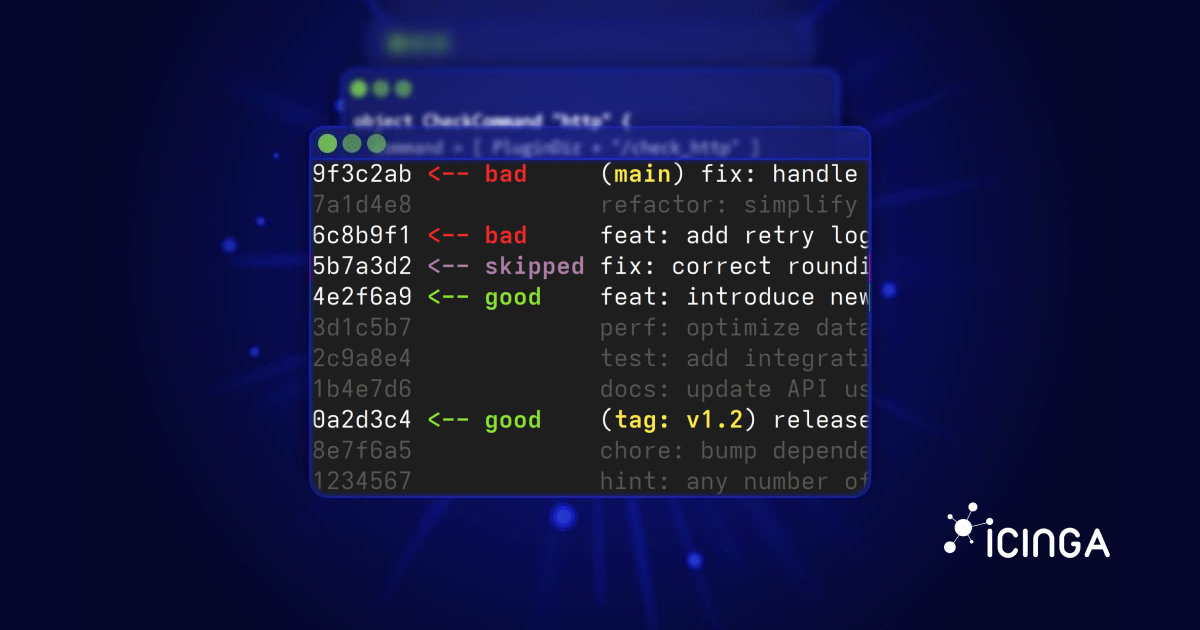
How to Use Git Bisect to Pinpoint Bugs Precisely
A feature that used to work suddenly broke. The problem? There were 300 commits since the last time I knew it worked. Checking each commit manually would take forever. Fortunately, Git has a tool designed exactly for this situation: git bisect. What is Git Bisect? The...

Managing the Icinga Director with Ansible
This is a guest blogpost from Sebastian Gumprich from T-Systems Multimedia Solutions GmbH --- Our company is using Icinga for quite some time now to monitor our whole infrastructure and its customers infrastructure. We deploy many Icinga instances for different teams...

Docker: Secure, but comfortable images.
While developing Docker images for Icinga 2, Icinga Web 2 and Icinga DB we stumbled over OpenShift which doesn’t allow images to run as root by default. One has to enable that explicitly. Also admins of K8s environments being more permissive by default may decide not...

Build your own Icinga Module
Building your own Icinga Module sounds like a big challenge, but is it really that hard? A look behind the scenes reveals that it's actually not as complicated as it sounds. But first things first: Why would you even want to create your own Module? It's fairly easy to...
Icinga DSL: A couple of (unconventional) examples
Today I will show you a couple of out of field useful functions from the Icinga DSL I use when creating some testing configurations for Icinga 2. Using the Icinga DSL is easy, quick and a good way of testing and validating your Icinga setup. Icinga 2 console...
Rule based monitoring with Icinga apply rules
Apply rules simplifies creation of objects like Service, Notification, Dependency, ScheduleDowntime which require object relation. In this blog post we will understand rule based monitoring with Icinga apply rules with examples. Requirement: Icinga 2 and Icinga Web 2...
Setting up Graphite from Scratch on Icinga Web 2
Introduction In this post, I will show you how easy you can integrate Graphite with Icinga Web 2. I assume you have a Icinga 2 ready with Icinga Web 2 Server running, and you have an additional Linux Server where you will install Graphite. It's recommended to have...
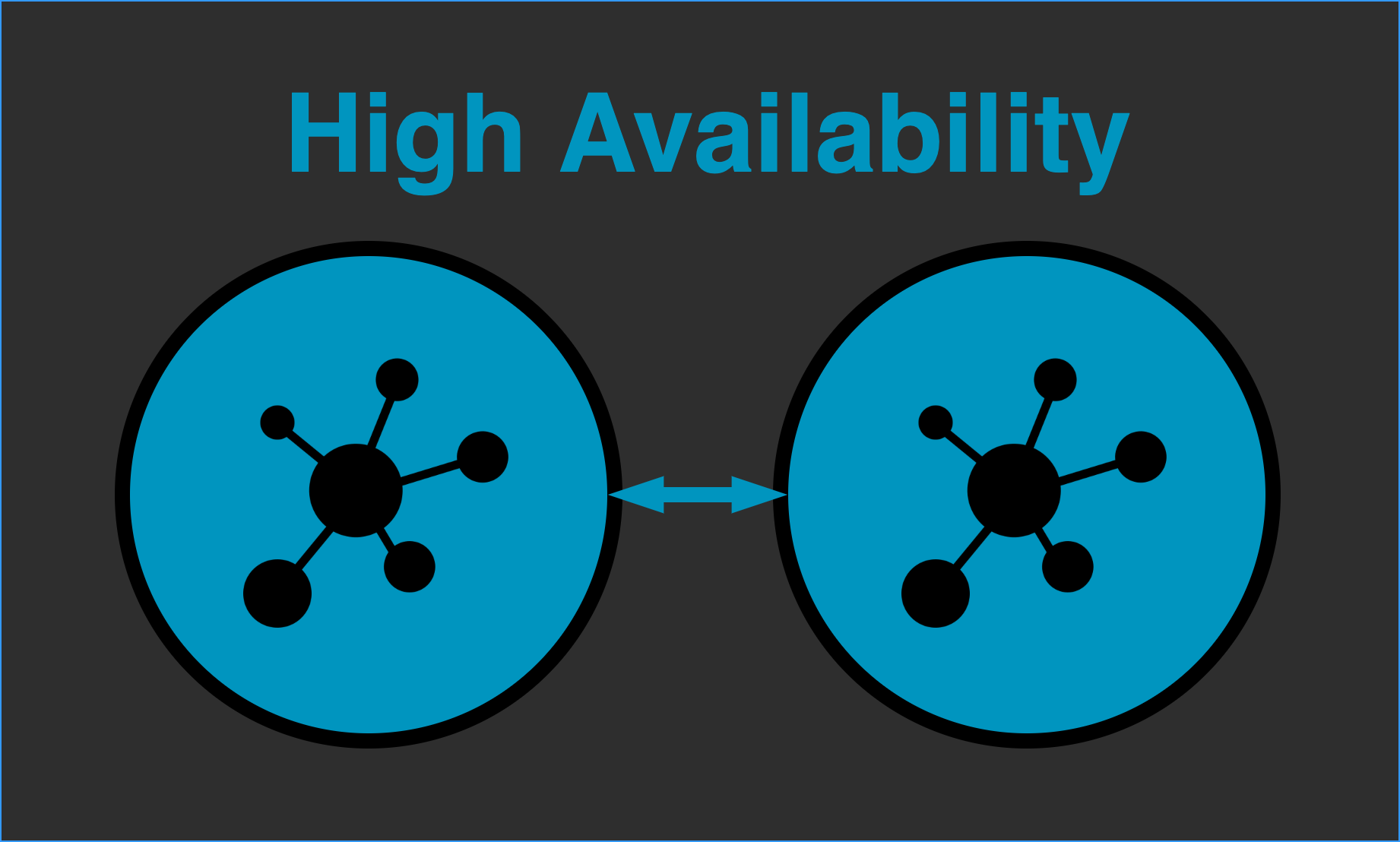
How to set up High-Availability Masters
When getting started with Icinga 2, a single master instance is often sufficient. However, if your monitoring is business-critical, you’ll need to set up High-Availability Masters to ensure redundancy and stability. This post will guide you through the process of...
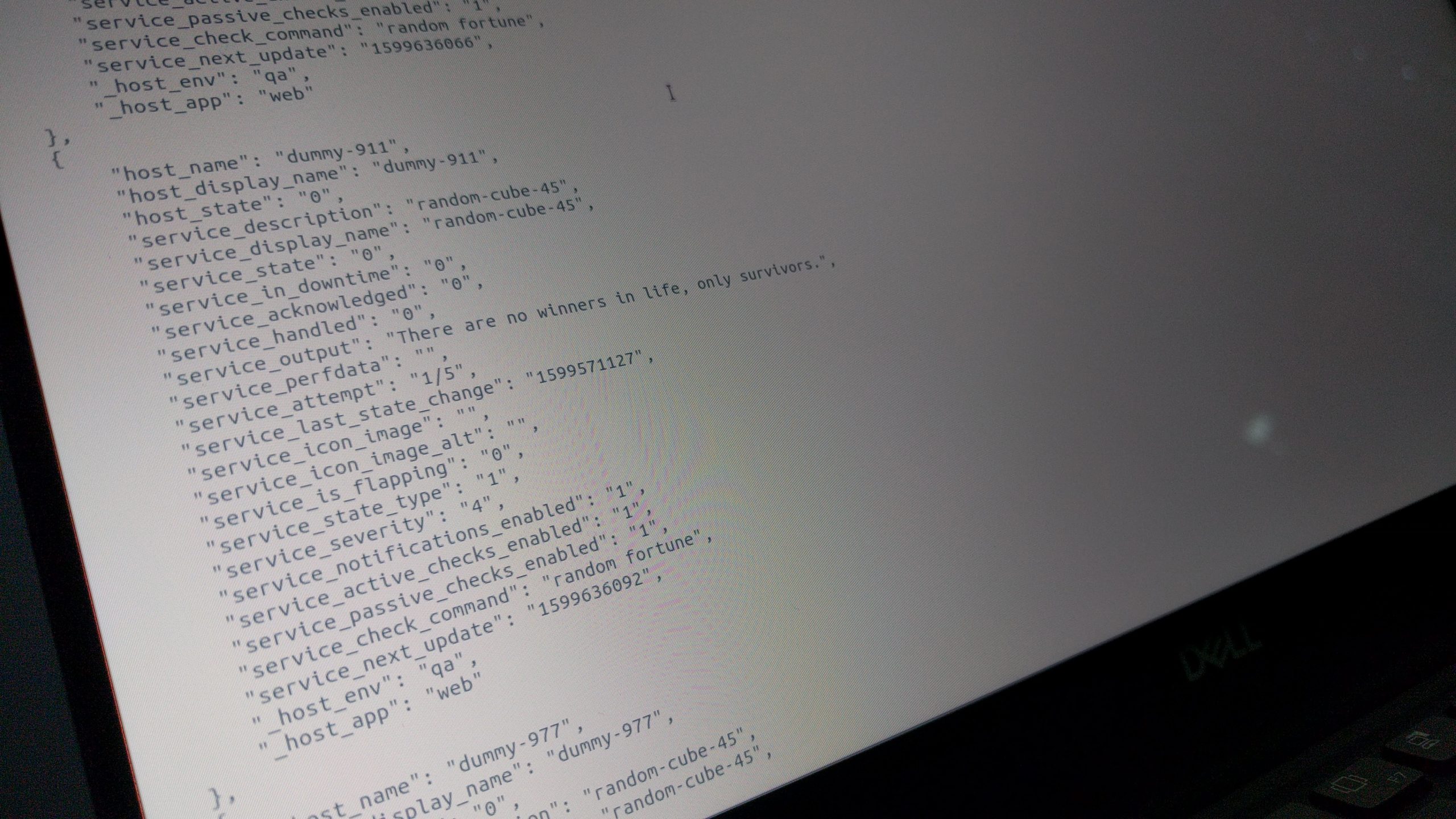
Exporting Data from Icinga Web 2
Today we will talk about exporting data (such as hosts and services) from Icinga Web 2 into various formats. Exporting From the UI You have probably already seen the drop-down in the upper left corner of a list? If you hover there with your mouse or focus it by...
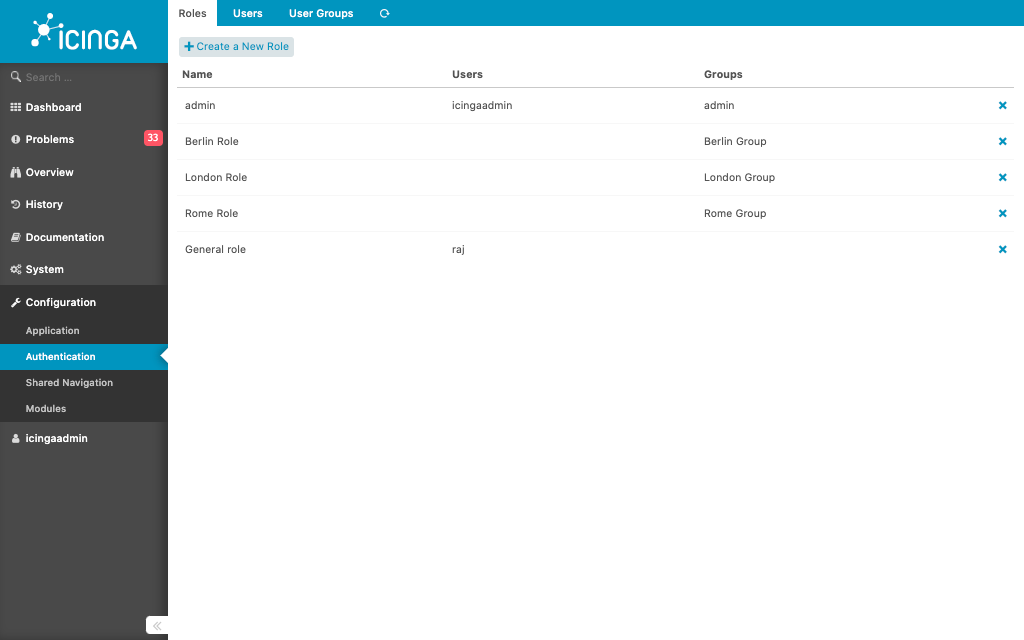
Icinga Web permissions and restrictions (how do they work, examples)
Permissions and restrictions are something used to control how much access is provided to a particular user or user group. Therefore one must first understand what is the role of a user or a group. Requirement: Icinga 2 and Icinga Web 2 installed. Hosts and services...

Subscribe to our Newsletter
A monthly digest of the latest Icinga news, releases, articles and community topics.